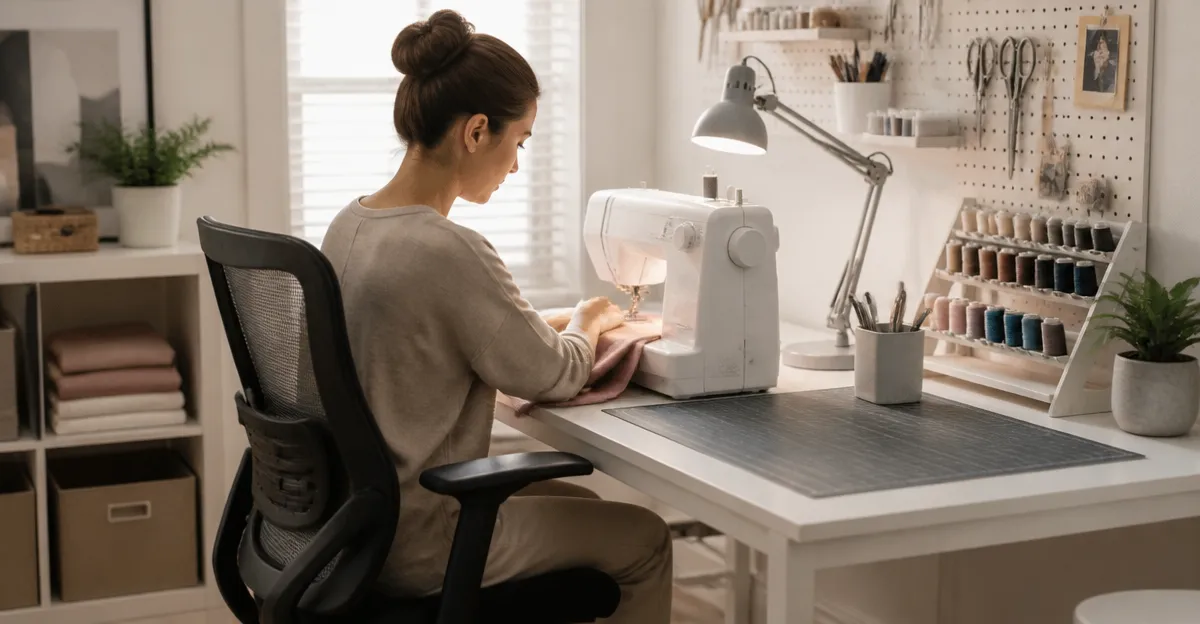
Ergonomics for Compact Sewing Hobbyist: The Complete Guide to Preventing Strain and Pain in Small Spaces
Introduction
Compact sewing spaces present unique challenges for posture, reach, and equipment organization. This guide explains how to create an ergonomic environment that minimizes strain while preserving the creative freedom of a small studio. Readers will learn foundational principles of ergonomics, discover product recommendations that fit limited footprints, and acquire actionable tips for daily practice. By the end of the article, one will be equipped to select the right furniture and adopt habits that protect the back, shoulders, and wrists.
Background and Context
Ergonomics is the scientific discipline that aligns work environments with the natural capabilities of the human body. In sewing, repetitive motions, prolonged sitting, and poorly positioned tools can lead to lumbar discomfort, neck tension, and carpal tunnel syndrome. Small rooms often force hobbyists to compromise on chair height, table size, or lighting, which amplifies these risks. Understanding the relationship between body mechanics and workspace layout is the first step toward a healthier sewing practice.
Key concepts include neutral spine alignment, the 20‑20‑20 rule for eye relief, and the importance of adjustable work surfaces. Neutral spine alignment means that the natural curves of the back are maintained while seated, reducing pressure on intervertebral discs. The 20‑20‑20 rule advises a short break every 20 minutes to look at an object 20 feet away for 20 seconds, preventing eye fatigue caused by close‑up fabric work. Adjustable work surfaces enable the user to keep elbows close to a 90‑degree angle, which lowers shoulder elevation and minimizes upper‑arm strain.
Ergonomic Seating for Small Sewing Spaces
Choosing a chair that supports the lumbar region while allowing height flexibility is essential for compact studios. The Arrow Sewing Height Chair offers targeted lumbar support, a height range of 18 to 22 inches, and a hidden storage compartment for notions. Its five‑star swivel base and heavy‑duty casters enable smooth movement without marking delicate flooring. With a rating of 4.7 out of 5 from 1,049 reviews, users consistently praise its comfort and ease of assembly.
For hobbyists who need an even more compact solution, the Sweetcrispy Vanity Chair provides a low‑back design that slides under a vanity or narrow desk. The chair features a high‑density foam cushion, PU leather upholstery for breathability, and a height adjustment range of 17.71 to 21.45 inches. Its 250‑pound weight capacity and BIFMA certification assure durability, while the 4.6 rating confirms broad user satisfaction.
Both chairs incorporate 360° swivel functionality, which is valuable when accessing fabric bins or pattern books placed around the work area. When space is at a premium, the ability to rotate without standing reduces the need for additional movement that could strain the lower back. Users should select a chair whose seat height aligns with the tabletop height to maintain elbows at or slightly above the work surface.
Adjustable Work Surfaces and Tables
A well‑designed table should accommodate a sewing machine, fabric rolls, and cutting tools while offering storage that does not encroach on floor space. The Sauder Sewing Cart features a spacious top, a drop‑leaf extension, and two storage bins plus a hidden shelf for a sewing machine. Its soft‑white finish with lintel oak accents blends with many décor styles, and the easy‑roll casters allow relocation within a small room. With a 4.6 rating from 4,799 reviews, it is praised for sturdy construction and practical dimensions (40.08" × 19.49" × 28.54").
The Sew Ready Folding Cutting Table expands the workspace to 58.75 inches and includes a printed grid with both inch and centimeter markings. Its height is adjustable from 30.25 to 38.75 inches, and the table folds for storage when not in use. Built‑in mesh drawers and a lower shelf keep tools organized and within arm’s reach. Users appreciate the sturdy powder‑coated steel frame and the ease of assembly, reflected in a 4.6 rating from 1,343 reviews.
When selecting a table, hobbyists should compare surface area, height adjustability, and storage options. A larger surface reduces the need to constantly reposition fabric, while adjustable height aligns the work plane with the seated or standing posture. Integrated storage eliminates the need for additional shelving that could clutter a compact room.
Standing Desks for Sewing and Crafting
Standing while sewing can alleviate lower‑back pressure and increase circulation, especially during long sessions. The Veken Standing Desk offers electric height adjustment from 28.3 to 46.5 inches, a quiet motor, and memory presets for quick transitions. Its 55‑inch desktop provides ample room for a sewing machine, dual monitors, and cutting mats, while built‑in cable management keeps cords tidy. The desk holds a 4.5 rating from 2,528 reviews, with users highlighting its stability and sleek design.
For hobbyists with limited floor space, the desk’s compact footprint is offset by the ability to fold the legs when not in use, though the product description does not explicitly mention folding; users should verify clearance before purchase. The electric mechanism eliminates manual crank effort, making height changes accessible for individuals with limited hand strength. Memory presets enable a seamless switch between sitting and standing without interrupting the creative flow.
When integrating a standing desk into a small studio, consider the surrounding layout. Position the desk near a power outlet and ensure that the casters can glide on the floor type without damaging the surface. Pairing the desk with an ergonomic chair such as the Arrow Sewing Height Chair creates a hybrid workstation that supports both seated and standing work.
Comparison and Selection Guide
| Feature | Arrow Sewing Height Chair | Sweetcrispy Vanity Chair | Sauder Sewing Cart | Sew Ready Cutting Table | Veken Standing Desk |
|---|---|---|---|---|---|
| Price (USD) | 399.99 | 48.99 | 232.64 | 224.99 | 109.98 |
| Rating | 4.7/5 (1,049 reviews) | 4.6/5 (2,456 reviews) | 4.6/5 (4,799 reviews) | 4.6/5 (1,343 reviews) | 4.5/5 (2,528 reviews) |
| Adjustable Height | 18‑22 in | 17.71‑21.45 in | Fixed (28.54 in overall height) | 30.25‑38.75 in | 28.3‑46.5 in (electric) |
| Storage | Under‑seat compartment | None | Two bins + hidden shelf | Two mesh drawers + lower shelf | Cable management only |
| Mobility | Heavy‑duty casters | Smooth casters | Easy‑roll casters | Locking casters | Fixed base with optional wheels |
| Best For | Dedicated sewing chair with lumbar support | Compact spaces, vanity use | Multi‑function cart with drop‑leaf | Large cutting area with grid | Hybrid sit‑stand workstation |
When deciding among these options, hobbyists should prioritize the element that currently limits their ergonomics. If back pain stems from inadequate lumbar support, the Arrow Sewing Height Chair is the most direct solution. If floor space is the primary constraint, the Sweetcrispy Vanity Chair or the Sauder Sewing Cart provide compact yet functional alternatives. For those who require a large, precise cutting surface, the Sew Ready Cutting Table offers grid markings that improve measurement accuracy. Finally, if alternating between sitting and standing is a goal, the Veken Standing Desk delivers electric height control with a generous desktop.
Best Practices & Tips
- Maintain a neutral spine by adjusting chair height so that feet rest flat on the floor and knees form a 90‑degree angle.
- Position the sewing machine at elbow height; the work surface should be just below the forearms when the shoulders are relaxed.
- Use a footrest if the chair height cannot be lowered sufficiently; this reduces pressure on the lower back.
- Keep frequently used tools within an arm’s reach to avoid excessive twisting or stretching.
- Implement the 20‑20‑20 rule: every 20 minutes, look at an object 20 feet away for at least 20 seconds.
- Incorporate micro‑breaks that include gentle neck rolls, shoulder shrugs, and wrist flexor stretches.
- When using a standing desk, shift weight from one foot to the other and use an anti‑fatigue mat to reduce foot fatigue.
Frequently Asked Questions
- What chair height is optimal for a sewing machine? The seat should be low enough that the elbows rest at or slightly above the machine’s work surface, typically between 18 and 22 inches for most adult hobbyists.
- Do I need a separate lumbar pillow if I buy the Arrow Sewing Height Chair? No; the chair includes built‑in lumbar support that aligns with the natural curve of the spine, eliminating the need for an additional pillow.
- Can the Sauder Sewing Cart support a heavy industrial sewing machine? The cart is designed for standard home‑use machines; for industrial units, verify the weight capacity in the product specifications before purchase.
- Is the grid on the Sew Ready Cutting Table accurate for both metric and imperial measurements? Yes; the printed grid includes both inch and centimeter markings, allowing precise layout for a variety of projects.
- How loud is the motor on the Veken Standing Desk? The motor operates below 52 decibels, which is comparable to a quiet conversation and will not disrupt a shared workspace.
- Will the Sweetcrispy Vanity Chair fit under a typical bathroom vanity? With a height range that tops out at 21.45 inches, the chair can slide beneath most standard vanity tops, providing a space‑saving seating option.
- What is the warranty coverage for these products? The Arrow Sewing Height Chair includes a 1‑year warranty, the Sauder Sewing Cart offers a 5‑year limited warranty, the Sweetcrispy Vanity Chair is BIFMA certified with standard manufacturer warranty, the Sew Ready Cutting Table provides a standard warranty (details in the listing), and the Veken Standing Desk includes a warranty covering the motor and frame for several years as specified by the seller.
Conclusion
Ergonomic considerations are paramount for compact sewing hobbyists who spend hours bending, reaching, and cutting in limited spaces. By selecting appropriate seating, adjustable tables, and a versatile standing desk, one can maintain a neutral posture, reduce repetitive strain, and enhance overall productivity. The products highlighted in this guide each address a specific ergonomic need while fitting within a small studio footprint. Implementing the best‑practice tips alongside these tools will create a healthier, more enjoyable sewing environment.
Products Featured in This Guide
Arrow Sewing Height Chair
Price: $399.99 | Rating: 4.7/5 (1,049 reviews)
Featured for its targeted lumbar support, height adjustability, and integrated storage that make it ideal for ergonomically demanding sewing tasks.
Sauder Sewing Cart
Price: $232.64 | Rating: 4.6/5 (4,799 reviews)
Featured for its spacious top, drop‑leaf extension, and built‑in storage bins that maximize functionality in a compact footprint.
Sweetcrispy Vanity Chair
Price: $48.99 | Rating: 4.6/5 (2,456 reviews)
Featured for its compact armless design, high‑density cushion, and height adjustability that suit vanity or small‑desk applications.
Sew Ready Folding Cutting Table
Price: $224.99 | Rating: 4.6/5 (1,343 reviews)
Featured for its large grid‑printed surface, adjustable height, and foldable design that provides precise cutting space without permanent floor occupation.
Veken Standing Desk
Price: $109.98 | Rating: 4.5/5 (2,528 reviews)
Featured for its electric height adjustment, spacious 55‑inch desktop, and quiet motor, enabling seamless transitions between sitting and standing work modes.